 Watch on YouTube
The publisher does not allow this video to play on other websites.
About the Movie
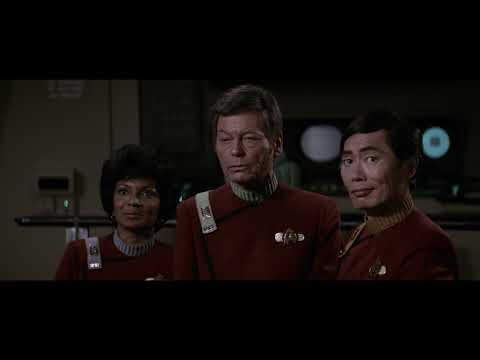
Admiral James T. Kirk is feeling his age. Starfleet has moved him behind a desk, and a training cruise aboard the Enterprise with a young cadet crew feels more like a farewell tour than a mission. Then a distress call pulls him toward the Genesis project, a technology that can rebuild a dead world into a living one — and toward an enemy he made fifteen years earlier. Khan Noonien Singh, a genetically engineered tyrant Kirk once exiled to a barren planet, has escaped, seized a starship, and spent every day of his exile planning his revenge.
Director Nicholas Meyer, who had never seen Star Trek before taking the job, rebuilt the franchise in the image of a naval adventure: uniforms like dress blues, ships that maneuver like submarines, and a duel between two captains who never share a room until the end. Ricardo Montalbán’s Khan is charming, brilliant, and utterly consumed. The film runs 1 hour 53 minutes, and its final act asks what a captain owes the people who serve under him. The answer it gives changed Star Trek permanently.
Why This Movie Matters to Sci-Fi
The first Star Trek film had been expensive and divisive, and the franchise’s future was genuinely in doubt. The Wrath of Khan, made for a fraction of that budget, saved it. Meyer and producer Harve Bennett understood that the series worked best as character drama in a military setting, and nearly everything Star Trek became afterward — the films, The Next Generation era, the modern series — builds on the foundation laid here.
It also set a standard for screen villains and for sequel craft: a follow-up that deepens the original instead of repeating it. Its submarine-style starship combat, its literary spine of Moby Dick and A Tale of Two Cities, and an ending that treats loss as real and costly are still the yardstick. Ask a room of science fiction fans to name the best Star Trek film and the argument usually ends here.